

 Back to Madeira Insider
Travel Tips
Madeira microclimates: why it rains in Rabaçal and shines in Funchal
The island of four seasons in a single day, explained.
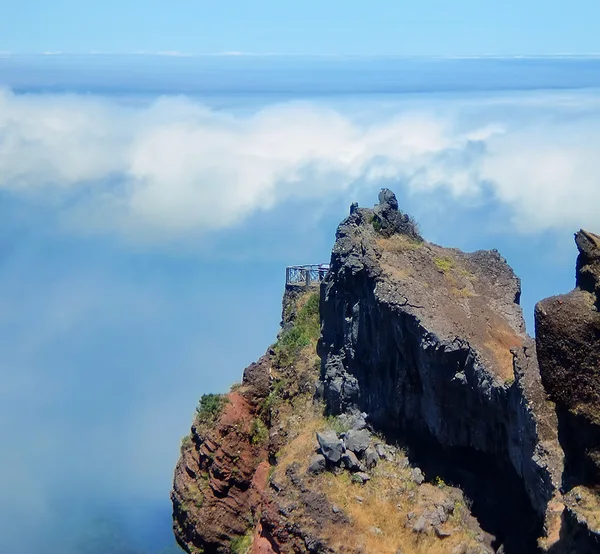
Yes, it is true, and it is not an exaggeration. It can be 25 degrees and sunny in Funchal and, less than half an hour's drive away, 15 degrees with rain and fog in Santana, at the same hour of the same day. The reason is simple: a high mountain range crosses the island from east to west and acts as a wall. Loaded clouds arrive from the north-east, hit the mountains, drop their rain on the north coast and the highlands, and reach the south coast already wrung dry. Which is why locals do not plan the day by the island forecast, but by the coast they will be standing on.
In short
Yes, it is true, and it is not an exaggeration. It can be 25 degrees and sunny in Funchal and, less than half an hour's drive away, 15 degrees with rain and fog in Santana, at the same hour of the same day. The reason is simple: a high mountain range crosses the island from east to west and acts as a wall. Loaded clouds arrive from the north-east, hit the mountains, drop their rain on the north coast and the highlands, and reach the south coast already wrung dry. Which is why locals do not plan the day by the island forecast, but by the coast they will be standing on.
The wall down the middle
Madeira climbs from sea level to 1,862 metres at Pico Ruivo in a handful of kilometres, and the spine that crosses it runs east to west, perpendicular to the prevailing north-easterly winds. That creates three climate worlds on an island you can cross in a morning.
The mechanism is called orographic precipitation, and it is simpler than the name suggests: humid Atlantic air, pushed by the northerly wind, is forced upward when it meets the mountains. Rising, it cools, and the moisture turns into cloud and rain that falls on the northern slope and the highlands. By the time that air crosses the ridge and descends on the southern side, it is dry. The numbers bear it out: at the same altitude, the north coast receives considerably more rain than the south, and in summer the contrast is sharper still.
The three climates of Madeira
The south coast, sunny and dry. Funchal, Câmara de Lobos, Ribeira Brava, Ponta do Sol, Calheta. Sheltered by the mountains, this is the warmest and driest part of the island, with Funchal sitting in a natural amphitheatre facing the sea. It is where tourism concentrates, and not by accident.
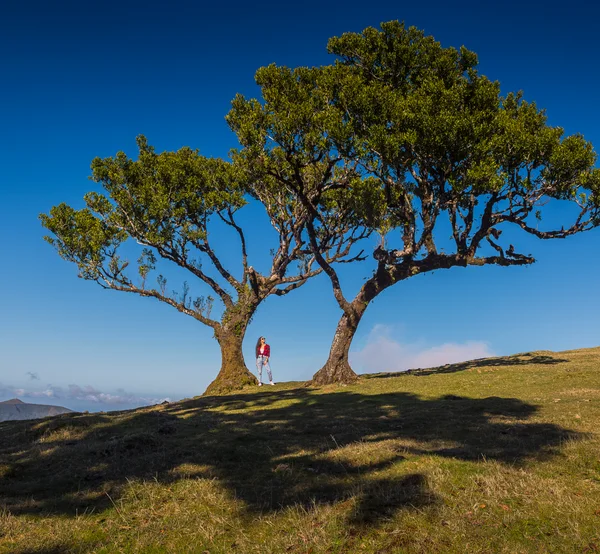
The north coast, green and humid. Santana, São Vicente, Porto Moniz. More exposed, cooler, with more rain and more cloud. It is also, for exactly that reason, the greenest and most dramatic: the Laurissilva, the forest that earned Madeira its World Heritage status, lives on this humidity.
The highlands, a climate of their own. Pico do Arieiro, Pico Ruivo, Paul da Serra. Above 1,200 metres everything changes: it can be 10 degrees colder than the coast, with a cutting wind, and in winter there is frost and occasionally snow on the peaks while people swim below. A walk that starts in a t-shirt in Funchal can end in a jacket at the summit, on the same day.
Four seasons in one day
The expression is local and it is literal. You can have breakfast with mango in the sun on a Funchal terrace, feel the cool mist of the forest in Santana at midday, catch a winter wind at Pico do Arieiro in the afternoon, and return to the warmth of the south coast at dusk. This is not unstable weather. It is geography: each of these zones has its own climate at the same time.
There is also an occasional guest that scrambles everything: the Leste, a hot dry wind off the Sahara that, on a few days a year, pushes temperatures above 30 degrees and fills the air with a dusty haze. It lasts a few days, and it is the exception that proves the rule of Madeiran mildness. This same Saharan dust is also why a sunrise at Pico do Areeiro can look pale or hazy even on an otherwise clear morning.
How to use this to your advantage
This is the practical part, and it is what separates people who know the island from first-time visitors.
- Do not trust the island-wide forecast. Check the forecast by zone. "It will rain in Madeira" is almost never true for the whole island at once.
- If the weather turns on one side, cross to the other. Rain in Funchal? Often you only need to head to the north coast, or the reverse, to change your day. The island is small enough for that to be a real strategy, not an act of desperation.
- Always dress in layers. Even in high summer, if you are going up the mountain or walking a levada at altitude, carry a warm layer.
- Plan high-altitude trails for stable days, and save the south coast for when the weather is uncertain. Always check trail status on the IFCN pages before setting out, because rain in the north closes routes frequently.
- For photography, the northern fog is a resource, not a problem. The Fanal forest and the Laurissilva come alive precisely on the days the south coast is in full sun.
The hidden advantage for visitors
Microclimates are, in the end, good news. They mean a rainy day rarely ruins a holiday in Madeira: there is almost always a part of the island with good weather, and getting there is half an hour of driving. For anyone planning with that logic, the island offers a kind of weather insurance that few destinations have. It is also why, on unsettled days, a local guide who knows the coasts is worth their weight: the decision of where to go today is made in the morning, looking at the right sky.
Frequently asked questions
Can it really be sunny and raining on the island at the same time?
Yes, and it happens often. The mountain in the middle separates two weather systems that can be opposites at the same moment.
Which side has the better weather?
The south coast, including Funchal, is the warmest, driest and sunniest year-round. That is why it is the most touristic area.
So is the north coast not worth visiting?
Quite the opposite. The north is greener and more dramatic precisely because of the humidity, and it has some of the island's most spectacular scenery. Just bring a waterproof.
How do I know what the weather will be on the trail I want to walk?
Check the forecast for the specific area, not the island, and confirm the route status before setting out. Weather services such as IPMA give forecasts by municipality.
Does it really snow in Madeira?
On the highest peaks, in winter, occasionally yes, while the coast sits at 18 to 20 degrees. It is one of the contrasts that best defines the island.
On unsettled days, this reading is exactly what we do for you: pick the right coast in the morning and build the day around the sun. The island almost always has good weather somewhere, and we know where.
See Nature & Wellness