

 Back to Madeira Insider
Wellness & Sustainability
Porto Santo's therapeutic sand: what psammotherapy is, and what it is not
Not quartz. Carbonate, formed by marine life over millennia.
The sand on Porto Santo is different from the sand on most European beaches. Instead of quartz grains, it is biogenic carbonate, formed over thousands of years from calcareous algae, shells, bryozoans and marine microorganisms, and it is rich in bioessential elements such as calcium, magnesium and strontium. Psammotherapy is the treatment by hot sand baths that exploits that composition.
In short
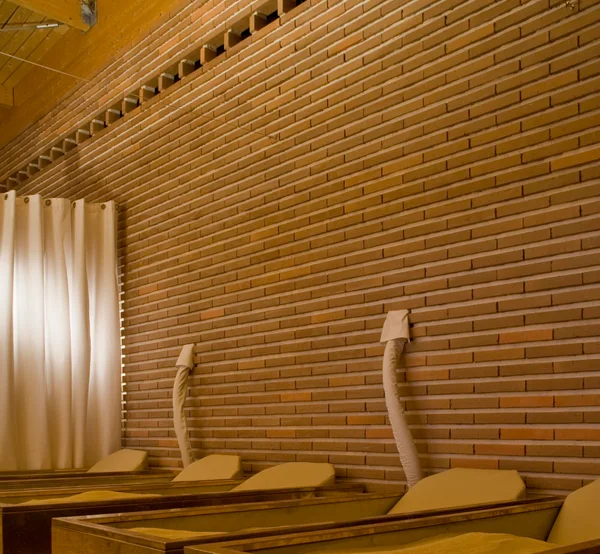
The sand on Porto Santo is different from the sand on most European beaches. Instead of quartz grains, it is biogenic carbonate, formed over thousands of years from calcareous algae, shells, bryozoans and marine microorganisms, and it is rich in bioessential elements such as calcium, magnesium and strontium. Psammotherapy is the treatment by hot sand baths that exploits that composition: in a controlled setting, the body is covered with sand heated gradually to around 40 to 43°C, combining thermal and mineral effects. It is recognised as an aid for osteoarticular and rheumatic complaints, it is a complementary therapy, and it requires supervision.
Why this sand is different
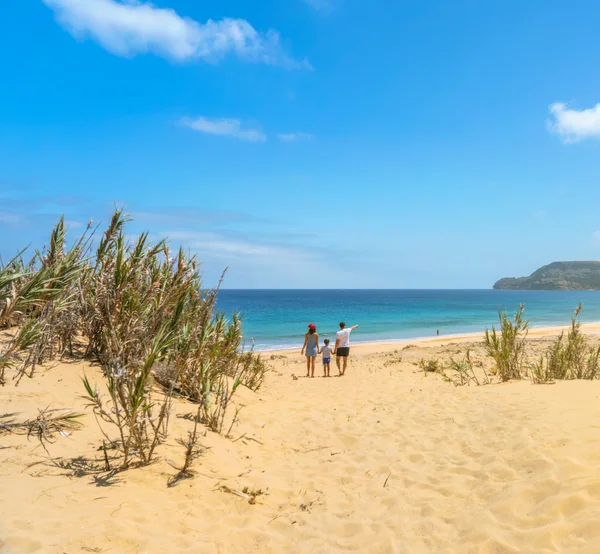
Almost every beach in mainland Portugal and Europe has siliceous sand, meaning quartz eroded from continental rock. Porto Santo's sand does not come from broken rock, it comes from marine life: bioclasts of calcareous algae, mollusc shells, bryozoans and the fossilised remains of microscopic organisms, accumulated over millennia on the submarine platform surrounding the island. A geological curiosity that surprises almost every visitor: Porto Santo is volcanic in origin, but its sand is golden rather than dark, precisely because it is not ground volcanic rock, it is carbonate of biological origin.
Everything else follows from that composition: the sand contains calcium, magnesium and strontium, the last of these with anti-inflammatory properties, as well as sulphur. And it is that chemical combination, together with heat, that gives the therapeutic practice its substance.
How a session actually works
Psammotherapy is not lying on the beach in the sun. In a controlled clinical setting, the process runs like this:
- The patient is placed in a sand bath or bed and progressively covered.
- The sand is heated gradually, to a range of roughly 40 to 43°C.
- As sweating begins, perspiration partially dissolves the carbonates in the sand, allowing calcium, magnesium and strontium to penetrate the skin.
- The combined action, thermal and chemical, is considered responsible for the therapeutic effect.
- There is continuous supervision, to maintain hydration and monitor blood pressure.
There is also the local tradition, far older than any clinical centre: sand baths taken on the beach itself during the hottest hours, a practice generations of Madeirans and Porto Santo residents know from family.
What the research shows, and what it does not
Let us be precise, because this is where most writing on the subject overreaches.
What is supported: the physical, chemical and thermal properties of Porto Santo's biogenic carbonate sands have been studied, and psammotherapy is recognised as an adjunct in treating orthopaedic, rheumatic and circulatory problems. The thermotherapeutic effect of heat on joint and muscle pain is itself well established in physical medicine and rehabilitation.
What it is not rigorous to claim: that the sand cures disease, replaces medical treatment, or produces fat loss. Psammotherapy is a complementary therapy, not an alternative to clinical care.
Contraindications to take seriously: intense heat and prolonged sweating are not suitable for everyone. Cardiovascular problems, uncontrolled hypertension, pregnancy and certain dermatological conditions require prior assessment. The rule is simple: speak to your doctor first, and take the treatment at a supervised centre, not on your own initiative on the beach for hours.
When to go
Counterintuitively, peak summer is not the best time. The shoulder seasons, May to June and September to November, offer the best balance: sand and sea still warm, ambient temperature more comfortable for a heat therapy, a calm island and open appointment slots at the centres. It is also why wellness is Porto Santo's strongest argument outside high season, a subject we develop in our article on the island off season.
Frequently asked questions
Is psammotherapy the same as thalassotherapy?
No, but they are complementary. Psammotherapy uses hot sand; thalassotherapy uses seawater, algae and the marine environment. The island's centres frequently combine the two.
How many sessions are needed?
It depends on the goal and on clinical assessment. Programmes over several consecutive days are the usual format, which makes Porto Santo a destination for a stay, not a day visit.
Can I simply bury myself in the sand on the beach?
The local tradition exists and is harmless with common sense: moderate timing, hydration, and never alone. What you should not do is improvise long sessions of intense heat, especially if you have high blood pressure or a heart condition.
Is it worth coming to Porto Santo specifically for this?
For people living with chronic osteoarticular pain, many visitors say yes, and they return. As part of a restful stay, it is a remarkable complement. As a promise of cure, no.
We design tailored wellbeing programmes on Porto Santo, coordinating the centre, the accommodation and the rhythm of the stay. Tell us what you are looking for, and we handle the logistics.
Discover Porto Santo