

 Back to Madeira Insider
Wellness & Sustainability
Madeira: stability, simplicity and timeless rhythm
Why people come for a week and start doing the maths on a month.
There is a pattern we see repeat: the visitor who came for a week and, by the third day, starts doing the arithmetic on staying a month. The explanation has three layers: one of the most stable climates in the world, a safety and simplicity of daily life that continental Europe has largely lost, and a rhythm that forces you, in the best sense, to slow down.
In short
There is a pattern we see repeat: the visitor who came for a week and, by the third day, starts doing the arithmetic on staying a month. The explanation has three layers: one of the most stable climates in the world (the "island of eternal spring" is not a slogan, it is meteorology), a safety and simplicity of daily life that continental Europe has largely lost, and a rhythm that forces you, in the best sense, to slow down.
Europe's most stable climate?
Few places on the planet have such a narrow annual temperature range: Funchal moves, broadly, between winter lows around 16°C and summer highs around 26°C. There are no suffocating heatwaves, no snow in the city, no dead seasons. For visitors this means something liberating: there is no wrong timing. For anyone staying longer it means something else: outdoor life, the morning swim, the walk, the coffee on the terrace, is a given from January to December, not a seasonal prize.
Simplicity as luxury
Madeira works at a human scale. Distances are short (no point on the island is more than about an hour and a bit from another), crime is among the lowest in Europe, the tap water is drinkable, the fish at lunch slept in the sea, and by the third day the man at the café knows your name. This is not nostalgia manufactured for visitors, it is simply how the island lives. Luxury here is not marble, it is being able to leave worry at the aircraft door.
Slow travel in practice
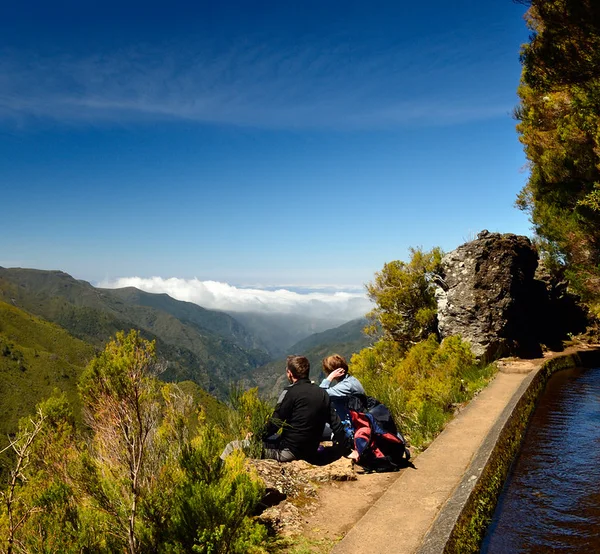
Madeira punishes hurry and rewards staying. Our counter-intuitive advice: do less. Instead of ticking off the whole island in five days:
- Stay in one municipality and get to know it properly. A week in Ponta do Sol or Santana reveals more Madeira than five different hotels.
- Adopt local routines. The market on Saturday morning, the poncha at the same bar at dusk, the parish festival as the social event of the week.
- Leave a whole day with no plan. In Madeira, the unforeseen (the fog that lifts, the neighbour who offers custard apples) is frequently the best part of the itinerary.
Staying seriously: long stays and remote work
The island understood the remote work shift early: Ponta do Sol has hosted a digital nomad village since 2021 that became a European reference, and today there are long-stay communities from Funchal to Calheta, with fast fibre, coworking overlooking the Atlantic, and a time zone that talks comfortably to Europe and reasonably to the Americas. If your life allows you to work from anywhere, Madeira is one of the rare "anywheres" where winter does not exist.
Frequently asked questions
Doesn't Madeira run out after two weeks?
That is the question of someone who has not been yet. Between municipalities and parishes with their own identity, hundreds of trails, the sea all year, Porto Santo next door and a calendar of festivals that never stops, the problem is usually the opposite.
Is there cultural life outside summer?
Yes. Funchal has theatre, concerts and a food scene in full development all year, and winter brings the Madeiran Christmas, which is a cultural season in itself.
Is a month in Madeira expensive?
Less than the European capitals most long-stay visitors come from, especially outside Funchal and outside the summer peak.
We design long stays and programmes built around your rhythm, from a month of remote work with weekend escapes to a sabbatical year in island mode. The hurry stays at the door.
Talk to us