

 Back to Insider
The Rhythm of Madeira – Folklore, dance & tradition
Where heritage comes to life
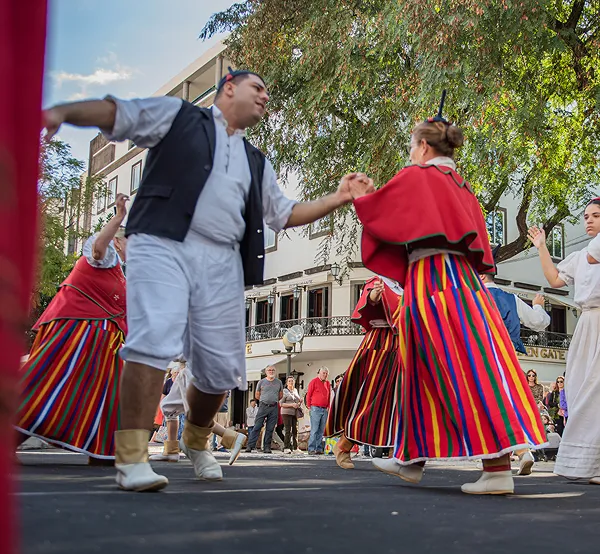
Madeira's soul doesn't live in books or museums. It dances in the streets, sings in the mountains, and echoes through generations. Its folklore is a celebration of identity, shaped by seafarers, farmers, and families who transformed daily life into art.
At DMC Madeira, we don't just show folklore, we connect guests to its roots, arranging authentic performances, workshops, and encounters with the island's cultural guardians.
The story behind Madeira's folklore
Songs of the land and sea
Madeira's folk traditions trace back to the 15th century, when settlers from mainland Portugal, Africa, and Flanders brought melodies, dances, and instruments that merged into a new cultural language. Through centuries of isolation and resilience, Madeirans turned their stories of labor, love, and nature into song.
The result is a folklore that feels deeply human, rhythmic, emotional, and joyful, echoing both the Atlantic winds and the island's volcanic heart.
Supportive text
Supportive text
Supportive text
Supportive text
Supportive text
Supportive text
Supportive text
The meaning behind the music
Instruments of identity
The sound of Madeira's folklore is unique, a mix of European structure and Atlantic spontaneity. Traditional instruments include:
Brinquinho: a handmade percussion instrument adorned with ribbons and miniature dolls that click and sway with rhythm.
Rajão: a small five-string guitar that inspired the ukulele's creation when Portuguese sailors carried it to Hawaii.
Braguinha: the island's version of the cavaquinho, producing bright, joyful chords.
Bombos and accordions: bringing energy to every performance.
Together, they form an unmistakable sound, rustic yet refined, playful yet powerful.
The story behind Madeira's folklore
Songs of the land and sea
Madeira's folk traditions trace back to the 15th century, when settlers from mainland Portugal, Africa, and Flanders brought melodies, dances, and instruments that merged into a new cultural language. Through centuries of isolation and resilience, Madeirans turned their stories of labor, love, and nature into song.
The result is a folklore that feels deeply human, rhythmic, emotional, and joyful, echoing both the Atlantic winds and the island's volcanic heart.
"In a world older and more complete than ours they move finished and complete, gifted with extensions of the senses we have lost or never attained, living by voices we shall never hear."
— Olivia Rhye, Teacher